


Yes – the training code and pruning recipes will be released on GitHub soon. User can train those models with their own dataset and different input image resolution.
Accelerate real-world AI with the
Ambarella Developer Zone
Developer Resources
Discover our capabilities. Sign up to unlock more tools and resources.
Sign Up NowLearning Center
Tutorials, white papers and sample applications to accelerate your development and keep you ahead of the AI curve
 Blog
Model Bets: Will Your Model Hold Up on Your Data?
Choosing the right AI model requires more than published benchmarks. Explore how testing models on real hardware with your own data can help developers validate performance, reduce risk, and make better decisions before committing to production.
 Blog
How Hellbender Builds Physical AI Perception on Ambarella’s Edge Platform
Bringing physical AI from prototype to production requires efficient, adaptable hardware. Explore how Hellbender uses Ambarella’s edge AI platform to run advanced perception models in real time while managing power, cost, and evolving AI workloads.
 Blog
The Edge Cases Were Never Edge Cases
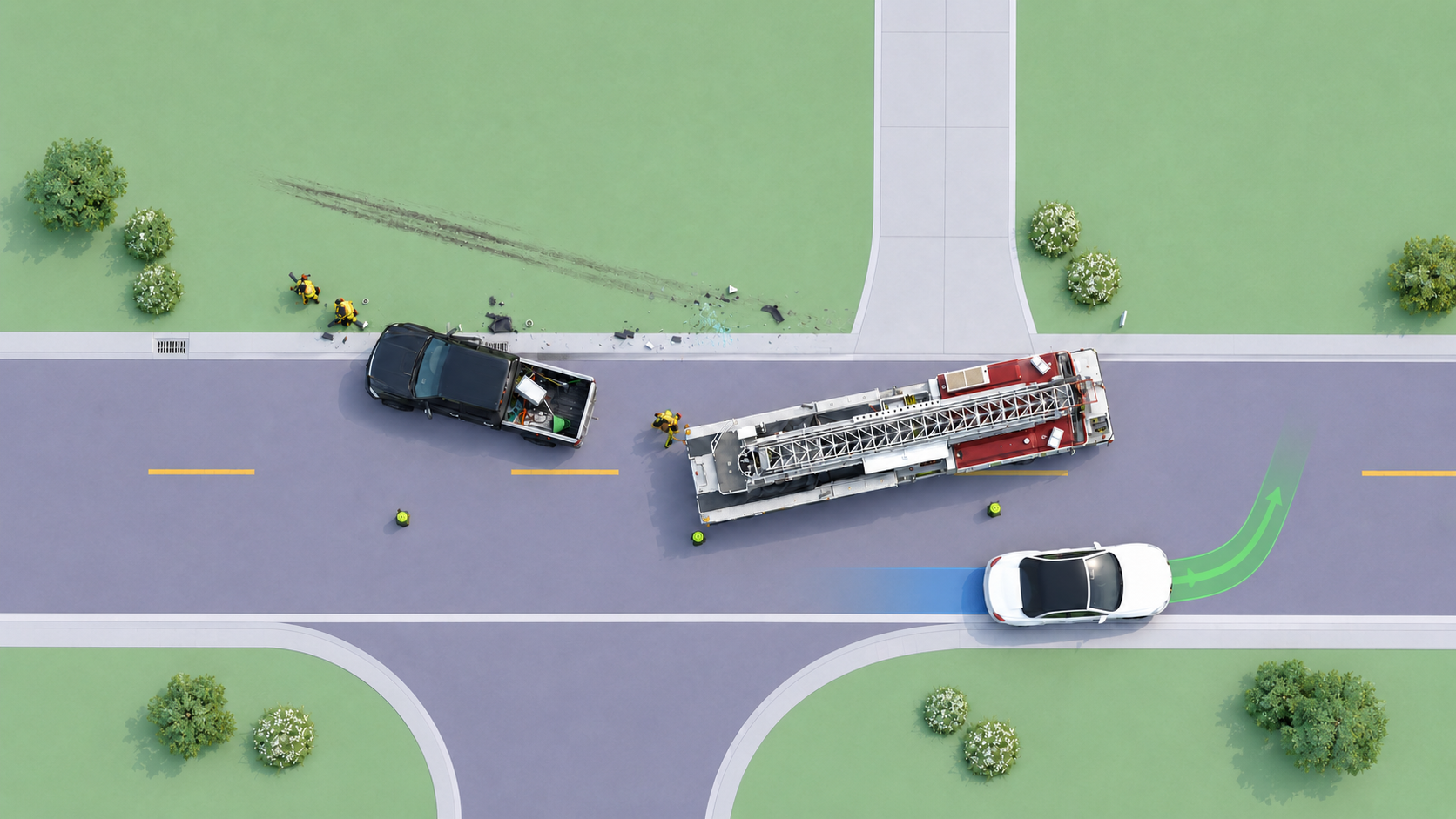
Real-world AI systems need more than the ability to detect objects. Explore why on-device reasoning is essential for understanding unfamiliar situations, making real-time decisions, and enabling physical AI to operate safely in unpredictable environments.
 Blog
The Gap Between Intent and Execution Is Where Edge AI Projects Stall
Turning AI-generated code into working edge applications requires more than software expertise. Explore how hardware-aware tools, platform knowledge, and real-world validation can help developers close the gap between intent and execution.
 Blog
When the Edge is 400 Kilometers Up: AI Space and the Limits of Cloud Computing
As AI expands into space, bandwidth, power, and latency constraints reveal the limits of cloud computing. Explore why processing data at the edge is becoming essential for the future of AI.
 Blog
The AI That Runs the Physical World Looks Nothing Like Your Favorite Chatbot
The AI that will operate the cameras, vehicles, robots, drones, medical devices, and industrial equipment of the next decade will not be a scaled-down version of what runs in the cloud.
 Blog
Everything is Going to Be Driven by Algorithms
Everything, in time, is going to be driven by algorithms. The question for the industry is where those algorithms run, how they are structured, and who builds the tools that make them deployable.
 Blog
AI Processors Matter When Selecting Fleet Dashcams
 Blog
Generative AI at the Edge – Key Takeaways from Omdia’s White Paper and Our Joint Webinar
 Blog
Collaborating With Robots: How AI Is Enabling the Next Generation of Cobots
Our Developer-Friendly Kit is Coming Soon
Our most advanced edge-AI development kit—now in its final stages of development and available soon. Designed for Physical AI applications across autonomous systems, industrial automation, and smart city infrastructure. Ideal for next-generation development.
Register Interest in a DevKit Now ➜Interested in partnering with Ambarella?
Reference designs, early silicon access, and engineering support for companies shipping edge AI products. Applications are reviewed by our partner team.
Register Now ➜FAQs
Find quick answers to common questions
Choose models based on your task category.
- Image classification: ResNet, EfficientNetV2 — assign a single label to an image.
- Object detection: YOLOX, RTMDet — locate and classify multiple objects.
- Segmentation: DeepLabv3+, TopFormer — assign a class to each pixel.
- Vision-Language Models (VLMs): OWL-ViT, LLaVA OneVision — enable multimodal reasoning and can be applied across classification, detection, and segmentation tasks.
The model garden provides curated recommendations per task, including compute and memory requirements to help match your silicon budget. VLMs are more resource-intensive, but offer strong generalization and often work without task-specific training.
Yes — every model in the garden comes with a pre-validated runtime package, including compatible ONNX/quantized models, pre-processing pipelines (resize, normalization, tokenization), and post-processing (NMS, depth scaling, keypoint decoding, etc.).
Quantization (INT8, W4A8, mixed precision, etc.) and unstructured sparsity reduce memory and latency but can introduce negligible accuracy losses depending on the model and data distribution. The models on model garden are curated models from Ambarella with tradeoff between data formats and pruning budget to recover accuracy. Accuracy of the models can be verified on boards.
For VLMs like OWL-ViT, LongCLIP, or LLaVA OneVision, prompts should be explicit, structured, and task-specific (e.g., “Describe the objects in this image,” “Locate all emergency vehicles,” “Answer the question based only on the image”). Accuracy can be evaluated using standardized benchmarks (VQA, COCO retrieval, phrase grounding, open-vocabulary detection) or domain-specific metrics such as answer correctness, grounding precision, or retrieval recall. The SDK includes evaluation utilities to run these tests locally on the silicon for consistent measurement.